6.30.2020

Mediante El Rastreo Pudo Recuperar El Teléfono Que Le Robaron, Por Este Hecho Quedó Aprehendido Un Joven De Loteo Nardelli

Se trata de Claudio Gabriel Verón de 25 años domiciliado en Manzana 27, casa 13 de Loteo Nardelli quien quedó aprehendido por el robó de celulares. La denuncia la radicó Mariela Benitez de barrio Guadalupe.

Siendo las 11:55 hs. de este lunes 29 de junio de 2020, Personal policial se constituyó a un local de una Inmobiliaria ubicada Bv. Hipólito Yrigoyen al 1541 (frente al hospital viejo), donde se entrevistaron con Cristian Aquino, quien manifestó que su concubina Mariela Benítez, radicó una denuncia hace dos semanas en el Destacamento VII UR IX del Barrio Guadalupe, por la sustracción de dos teléfonos celulares y dinero en efectivo. Con la aplicación que poseía en su teléfono celular rastreó uno de los sustraídos, arrojando la dirección antes mencionada, encontrándose en posesión de Claudio Gabriel Verón de 25 año, domiciliado en Manzana 27, Casa 13- Loteo Nardelli de Reconquista, se recuperó un Teléfono celular Marca Samsung. Por el hecho Verón quedó aprehendido. El Fiscal de Turno ratificó dicha medida procesal.

Envía tu noticia al WhatsApp 15-685798 – Súmate a la FanPage: ReconquistaNoticias.com

More articles

10 Hacking Websites & forums 2018 - Underground hacker sites

  • Hakin9: E-magazine offering in-depth looks at both attack and defense techniques and concentrates on difficult technical issues.
  • SecTools.Org: List of 75 security tools based on a 2003 vote by hackers.
  • Phrack Magazine: Digital hacking magazine.
  • HackRead: HackRead is a News Platform that centers on InfoSec, Cyber Crime, Privacy, Surveillance, and Hacking News with full-scale reviews on Social Media Platforms.
  • The Hacker News: The Hacker News — most trusted and widely-acknowledged online cyber security news magazine with in-depth technical coverage for cybersecurity.
  • Metasploit: Find security issues, verify vulnerability mitigations & manage security assessments with Metasploit. Get the worlds best penetration testing software now.
  • Packet Storm: Information Security Services, News, Files, Tools, Exploits, Advisories and Whitepapers.
  • KitPloit: Leading source of Security Tools, Hacking Tools, CyberSecurity and Network Security.
  • Exploit DB: An archive of exploits and vulnerable software by Offensive Security. The site collects exploits from submissions and mailing lists and concentrates them in a single database.
  • Hacked Gadgets: A resource for DIY project documentation as well as general gadget and technology news.

6.11.2020

How Block Chain Technology Can Help Fight Wuhan Corona Virus Outbreak

As the death toll and the infected cases of widespread coronavirus continue to increase, global organizations and the tech industry has come forward with technology like blockchain to fight coronavirus.

Along with the equipment and monetary support, technology also withstands against the virus with better plans and solutions. Hence, tech industries have started leveraging blockchain technology in the wake of a global health emergency.

Blockchain Helps In Real-Time Online Tracking

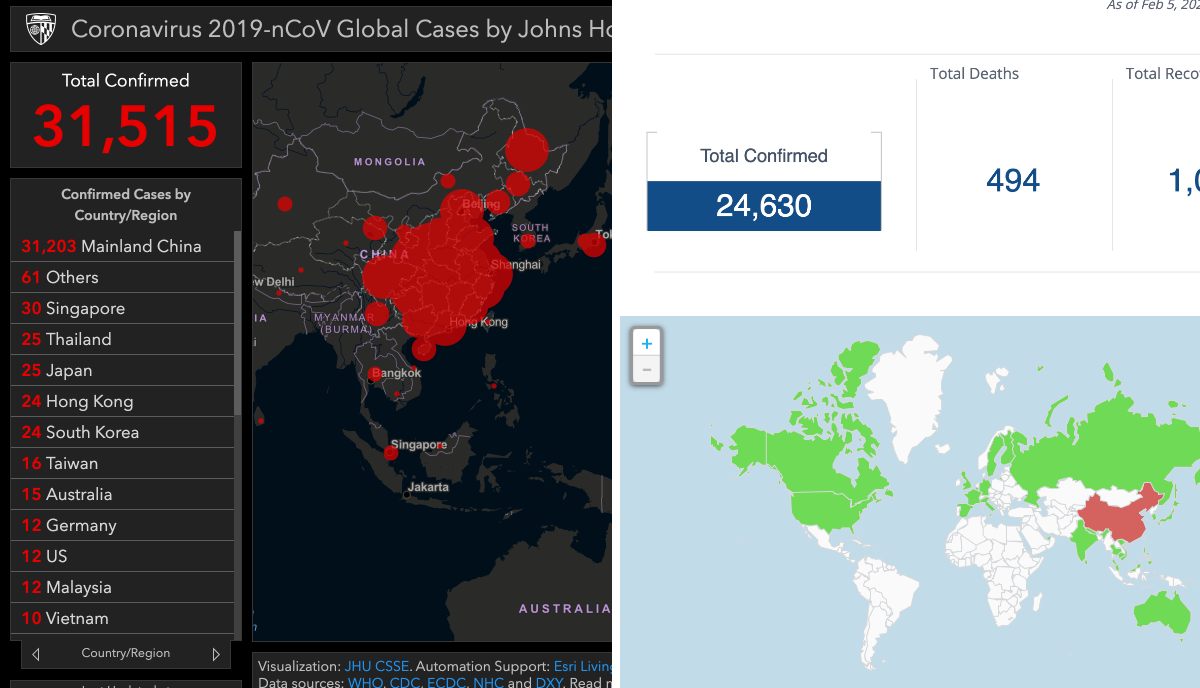
The Center for Systems Science and Engineering has already set up an online platform to track coronavirus and visualize the growing number of infected patients in real-time.

But Acoer, an Atlanta-based blockchain app developer, has also launched an alternative online data visualization tool to easily trail and depict the Cororanvirus outbreak using blockchain technology.

Acoer platform, named HashLog, is more advanced and clear as it pulls the data from the Hedera Hashgraph database using the HashLog data visualization engine.

Hedera Hashgraph is an immutable, transparent and decentralized database based on distributed ledger technology that provides synchronized and unchangeable data from the public networks.

Moreover, researchers, scientists, and journalists can use the HashLog dashboard to understand the spread of the virus and act against it swiftly.

For data sources, Johns Hopkins CSSE extracts data from WHO, CDC, ECDC, NHC, and DXY. On the other hand, Acoer maps the public data, including data from the Center for Disease Control (CDC) and the World Health Organization (WHO). Therefore, data may differ on both platforms.

(left) CSSA and Acoer (right)

Blockchain Can Help Monitor And Control Money Flow

To fight the further spread of the coronavirus (2019-nCoV) outbreak globally, China has also received abundant monetary support from the international community to create better action plans.

China's govt-led organization and charities are responsible for overseeing and utilizing the influx of money to research and generate a solution for coronavirus. But due to the lack of coordination and mismanagement among the various organization, money is not being laid out to curb the crisis.

Recently, a paper published by Syren Johnstone, from the University of Hong Kong, discusses the problems encountered by charities, in China and elsewhere. It argues that the present crisis should be seen as a call to arms.

Syren urges for a borderless solution with better management of donations and implementation using the emerging tech like Blockchain and Artificial Intelligence.

Keeping that in mind, Hyperchain, a Chinese company, also announced blockchain-based charity platform to streamline the donation from all over the world.

Since the Hyperchain platform is based on the blockchain, it offers more transparency among the sender and receiver of funds to bring trust and immutability to restrict the transaction data deletion.

Overall, Hyperchain improves administrative function for the money and also extends the logistics actions.

@HACKER NT

Related posts


DOWNLOAD NANOCORE RAT 1.2.2.0 CRACKED – REMOTE ADMINISTRATION TOOL

NanoCore is one of the most powerful RATs ever created. It is capable of taking complete control of a victim's machine. It allows a user to control the system with a Graphical User Interface (GUI). It has many features which allow a user to access remote computer as an administrator. Download nanocore rat 1.2.2.0 cracked version free of cost.
NanoCore's developer was arrested by FBI and pleaded guilty in 2017 for developing such a malicious privacy threat, and sentenced 33 months in prison.

FEATURES

  • Complete Stealth Remote Control
  • Recover Passwords from the Victim Device
  • Manage Networks
  • Manage Files
  • Surveillance
  • Plugins (To take it to the next level)
  • Many advanced features like SCRIPTING

DOWNLOAD NANOCORE RAT 1.2.2.0 CRACKED – REMOTE ADMINISTRATION TOOL

Continue reading


  1. Pentest Dns Server
  2. Pentest Enumeration
  3. Hacking Box
  4. Hacking To The Gate
  5. Pentest Kit
  6. Hacker Language
  7. Pentest
  8. Hacker0Ne
  9. Hacking Ethics

Practical Dictionary Attack On IPsec IKE

We found out that in contrast to public knowledge, the Pre-Shared Key (PSK) authentication method in main mode of IKEv1 is susceptible to offline dictionary attacks. This requires only a single active Man-in-the-Middle attack. Thus, if low entropy passwords are used as PSKs, this can easily be broken.

This week at the USENIX Security conference, Dennis Felsch will present our research paper on IPsec attacksThe Dangers of Key Reuse: Practical Attacks on IPsec IKE. [alternative link to the paper]

In his blog post, Dennis showed how to attack the public key encryption based authentication methods of IKEv1 (PKE & RPKE) and how to use this attack against IKEv2 signature based authentication method. In this blog post, I will focus on another interesting finding regarding IKEv1 and the Pre-Shared Key authentication.

IPsec and Internet Key Exchange (IKE)

IPsec enables cryptographic protection of IP packets. It is commonly used to build VPNs (Virtual Private Networks). For key establishment, the IKE protocol is used. IKE exists in two versions, each with different modes, different phases, several authentication methods, and configuration options. Therefore, IKE is one of the most complex cryptographic protocols in use.

In version 1 of IKE (IKEv1), four authentication methods are available for Phase 1, in which initial authenticated keying material is established: Two public key encryption based methods, one signature based method, and a PSK (Pre-Shared Key) based method.

The relationship between IKEv1 Phase 1, Phase 2, and IPsec ESP. Multiple simultaneous Phase 2 connections can be established from a single Phase 1 connection. Grey parts are encrypted, either with IKE derived keys (light grey) or with IPsec keys (dark grey). The numbers at the curly brackets denote the number of messages to be exchanged in the protocol.

Pre-Shared Key authentication

As shown above, Pre-Shared Key authentication is one of three authentication methods in IKEv1. The authentication is based on the knowledge of a shared secret string. In reality, this is probably some sort of password.

The IKEv1 handshake for PSK authentication looks like the following (simplified version):


In the first two messages, the session identifier (inside HDR) and the cryptographic algorithms (proposals) are selected by initiator and responder. 

In messages 3 and 4, they exchange ephemeral Diffie-Hellman shares and nonces. After that, they compute a key k by using their shared secret (PSK) in a PRF function (e.g. HMAC-SHA1) and the previously exchanged nonces. This key is used to derive additional keys (ka, kd, ke). The key kd is used to compute MACI over the session identifier and the shared diffie-hellman secret gxy. Finally, the key ke is used to encrypt IDI (e.g. IPv4 address of the peer) and MACI

Weaknesses of PSK authentication

It is well known that the aggressive mode of authentication in combination with PSK is insecure and vulnerable against off-line dictionary attacks, by simply eavesedropping the packets. For example, in strongSwan it is necessary to set the following configuration flag in order to use it:
charon.i_dont_care_about_security_and_use_aggressive_mode_psk=yes

For the main mode, we found a similar attack when doing some minor additional work. For that, the attacker needs to waits until a peer A (initiator) tries to connect to another peer B (responder). Then, the attacker acts as a man-in-the middle and behaves like the peer B would, but does not forward the packets to B.

From the picture above it should be clear that an attacker who acts as B can compute (gxy) and receives the necessary public values session ID, nI, nR. However, the attacker does not know the PSK. In order to mount a dictionary attack against this value, he uses the nonces, and computes a candidate for for every entry in the dictionary. It is necessary to make a key derivation for every k with the values of the session identifiers and shared Diffie-Hellmann secret the possible keys ka, kd and ke. Then, the attacker uses ke in order to decrypt the encrypted part of message 5. Due to IDI often being an IP address plus some additional data of the initiator, the attacker can easily determine if the correct PSK has been found.

Who is affected?

This weakness exists in the IKEv1 standard (RFC 2409). Every software or hardware that is compliant to this standard is affected. Therefore, we encourage all vendors, companies, and developers to at least ensure that high-entropy Pre-Shared Keys are used in IKEv1 configurations.

In order to verify the attack, we tested the attack against strongSWAN 5.5.1.

Proof-of-Concept

We have implemented a PoC that runs a dictionary attack against a network capture (pcapng) of a IKEv1 main mode session. As input, it also requires the Diffie-Hellmann secret as described above. You can find the source code at github. We only tested the attack against strongSWAN 5.5.1. If you want to use the PoC against another implementation or session, you have to adjust the idHex value in main.py.

Responsible Disclosure

We reported our findings to the international CERT at July 6th, 2018. We were informed that they contacted over 250 parties about the weakness. The CVE ID for it is CVE-2018-5389 [cert entry].

Credits

On August 10th, 2018, we learned that this attack against IKEv1 main mode with PSKs was previously described by David McGrew in his blog post Great Cipher, But Where Did You Get That Key?. We would like to point out that neither we nor the USENIX reviewers nor the CERT were obviously aware of this.
On August 14th 2018, Graham Bartlett (Cisco) email us that he presented the weakness of PSK in IKEv2 in several public presentations and in his book.
On August 15th 2018, we were informed by Tamir Zegman that John Pliam described the attack on his web page in 1999.

FAQs

  • Do you have a name, logo, any merchandising for the attack?
    No.
  • Have I been attacked?
    We mentioned above that such an attack would require an active man-in-the-middle attack. In the logs this could look like a failed connection attempt or a session timed out. But this is a rather weak indication and no evidence for an attack. 
  • What should I do?
    If you do not have the option to switch to authentication with digital signatures, choose a Pre-Shared Key that resists dictionary attacks. If you want to achieve e.g. 128 bits of security, configure a PSK with at least 19 random ASCII characters. And do not use something that can be found in public databases.
  • Am I safe if I use PSKs with IKEv2?
    No, interestingly the standard also mentions that IKEv2 does not prevent against off-line dictionary attacks.
  • Where can I learn more?
    You can read the paper[alternative link to the paper]
  • What else does the paper contain?
    The paper contains a lot more details than this blogpost. It explains all authentication methods of IKEv1 and it gives message flow diagrams of the protocol. There, we describe a variant of the attack that uses the Bleichenbacher oracles to forge signatures to target IKEv2. 
Related articles
  1. Pentest Services
  2. Pentest Training
  3. Hacker Website
  4. Pentest Plus
  5. Pentest Website
  6. Pentest Windows
  7. Pentest Process
  8. Hackerx
  9. Pentest Cheat Sheet
  10. Pentest Enumeration
  11. Pentest Xss
  12. Pentest Free
  13. Pentest Tools Framework
  14. Pentest Cheat Sheet

HACKING GMAIL FOR FREE CUSTOM DOMAIN EMAIL

hacking-gmail-for-free-custom-domain-email


HACKING GMAIL FOR FREE CUSTOM DOMAIN EMAIL

When it comes to email providers, there's no competitor to Google's awesome features. It is efficient which connects seamlessly with the rest of your Google products such as YouTube, Drive, has a major application called Gmail Inbox, and is overall an extremely powerful email service. However, to use it with a custom domain, you need to purchase Google Apps for either $5 or $10/month, which for casual users is a bit unnecessary. On top of that, you don't even get all of the features a personal account gets, e.g. Inbox. So, here's a free way to use your Gmail account with a custom domain. I am just going to show you hacking Gmail for free custom domain email.

SO, HOW HACKING GMAIL FOR FREE CUSTOM DOMAIN EMAIL

PASSWORD: EHT

STEPS:

  • First, register with Mailgun using your Gmail address. Use your Gmail only. Once you have clicked the confirm link, log in to the Mailgun website. Now you're in the dashboard, move on the right under "Custom Domains", click "Add Domain".
  • Follow the setup instructions and set DNS records with whoever manages your DNS. Once you've done this, click on the "Routes" link on the top to set up email forwarding.
  • Now move to the Route tab and click on Create New Route.
  • As you click the button, you will see a page like below. Just enter the information as entered in the following screenshot.
  • Just replace the quoted email with your desired email in the above-given screenshot.
  • Next, we'll setup SMTP configuration so we would be able to send emails from an actual server. Go to "Domains" tab, click on your domain name.
  • On this page, click "Manage your SMTP credentials" then "New SMTP Credential" on the next page.
  • Type in the desired SMTP credentials. And, go to Gmail settings and click "Add another email address you own". Once you open, enter the email address you wish to send from.
  • In the next step, set the SMTP settings as follows.
  • After clicking "Add Account" button, now you're done.
  • The final step, make sure to set it to default email in the Gmail settings > Accounts.
That's all. Now you got free Gmail custom domain with 10,000 emails per month. Hope it will work for you. If you find any issue, just comment below.


Note: Use Virtual Machine and scan on VirusTotal before downloading any program on Host Machine for your privacy.

Related word


6.10.2020

BurpSuite Introduction & Installation


What is BurpSuite?
Burp Suite is a Java based Web Penetration Testing framework. It has become an industry standard suite of tools used by information security professionals. Burp Suite helps you identify vulnerabilities and verify attack vectors that are affecting web applications. Because of its popularity and breadth as well as depth of features, we have created this useful page as a collection of Burp Suite knowledge and information.

In its simplest form, Burp Suite can be classified as an Interception Proxy. While browsing their target application, a penetration tester can configure their internet browser to route traffic through the Burp Suite proxy server. Burp Suite then acts as a (sort of) Man In The Middle by capturing and analyzing each request to and from the target web application so that they can be analyzed.


Everyone has their favorite security tools, but when it comes to mobile and web applications I've always found myself looking BurpSuite . It always seems to have everything I need and for folks just getting started with web application testing it can be a challenge putting all of the pieces together. I'm just going to go through the installation to paint a good picture of how to get it up quickly.

BurpSuite is freely available with everything you need to get started and when you're ready to cut the leash, the professional version has some handy tools that can make the whole process a little bit easier. I'll also go through how to install FoxyProxy which makes it much easier to change your proxy setup, but we'll get into that a little later.

Requirements and assumptions:

Mozilla Firefox 3.1 or Later Knowledge of Firefox Add-ons and installation The Java Runtime Environment installed

Download BurpSuite from http://portswigger.net/burp/download.htmland make a note of where you save it.

on for Firefox from   https://addons.mozilla.org/en-US/firefox/addon/foxyproxy-standard/


If this is your first time running the JAR file, it may take a minute or two to load, so be patient and wait.


Video for setup and installation.


You need to install compatible version of java , So that you can run BurpSuite.
Continue reading
  1. Pentest Tools
  2. Hacking Programs
  3. Pentest Tools Github
  4. Hacking Tools
  5. Hacking The System
  6. Pentest Tools
  7. Pentesting Tools
  8. Hacker0Ne
  9. Hacker News
  10. How To Pentest A Website With Kali
  11. Pentest Box
  12. Pentest Xss
  13. Pentest Tools Free
  14. Pentest Jobs
  15. Pentest Checklist
  16. Pentesterlab
  17. Pentest Basics
  18. Pentest Jobs
  19. Hacking Names

PentestBox - Opensource PreConfigured Portable Penetration Testing Environment For The Windows

Related posts

Top 10 Great Gifts For The Hacker In Your Life

Give gifts this holiday season that inspires your favorite hackers to make something great. Our ten top picks for gifts to make 'em smile are perfect for hackers of all styles, ages, and interests.
Holiday gift guides always struggle when faced with nailing down a list for hackers — that's because hackers are as diverse in their interests and fascinations as they are diverse in gender, color, size and everything else. Someone with a multi-focused set of curiosity and unique gifts for finding out what makes the crackable crack may seem like a daunting individual to stuff a stocking for … but don't fret. With a keen eye on the latest interests in hacker culture, we've got a gift guide that can make the hacker in your life smile as they enjoy using your gift to hack and explore throughout the coming year.
The Onion Pi-Iemhacker
Anonymity online: The Onion Pi
One of the most popular "snake oil" (fake) privacy gadgets is the so-called "Tor in a box" — a plug-and-play gadget that promises to make you anonymous online. Nearly all of these are made by clueless charlatans whose products put you at risk for privacy and security breaches. But your favorite hacker can just make or build an "Onion Pi" for $69.95, and with this free tutorial.

Attribution Dice
With Attribution Dice ($20), anyone can be a high-priced security consultant, and predict breach headlines before PR firms have a chance to feed them to reporters! With every security breach, hackers roll their eyes when headlines and PR firms roll out the same old, same old terms, methods and culprits. Instead of rolling eyes, your hacker can roll the dice, and wow friends, family, and neighbors with their hacker cyber-powers.
21 Bitcoin Computer
Money is always a welcome gift. Give the gift of going hands-on with Bitcoin with the 21 Bitcoin Computer. "The 21 Bitcoin Computer is ideal for buying and selling digital goods and services. You can use it to create bitcoin-payable APIs, set up your own personal digital goods store, pay people to share your content online, or host online games of skill." It's not cheap ($395) and comes with controversy, but it's a cool toy with a lot of potential, and 21 Inc. is going to be releasing an open source package for the device soon.
Gentleman's Bogota Lockpicks and Clear Practice Lock
Iemhacker-hacking-tutorial
Conventional wisdom suggests that all hackers know how to pick locks, but can they do it in style? A perfect stocking stuffer for slick hackers of all genders is the Gentleman's Bogota lockpick set ($34.95). These featherweights pin discreetly to a collar, hat, sleeve, vest, hemline, or wherever they choose. If the hacker you're shopping for wants to learn to lockpick, or just brush up on technique, throw in the clever Clear Practice Lock ($34.95).
Inverse Path USB Armory
Iemhacker-hacking-news-tutorial-hackernews
In this reviewer's opinion, every hacker should have a USB Armory in their stocking this year. The Inverse Path USB Armory ($130) is a little USB stick with an entire computer onboard (800MHz ARM processor, 512MB RAM), designed to be a portable platform for personal security applications — and lives up to its reputation as "the Swiss Army Knife of security devices."
Hack-A-Day Gift Card
The cornerstone of hacker culture Hack-A-Day has a store offering gift cards and merchandise a-plenty. In it, you'll find a Bukito portable 3D printer ($899.97), ever-popular Facedancer21 and Gootfet42, a low energy Bluetooth Arduino microcontroller called the Lightblue Bean, and the pocket-sized open source robot arm, Mearm.
Hackers 20th Anniversary Blu-Ray Edition
Hack the planet! The 20th anniversary of influential 1995 cyberpunk film "Hackers" was this year, and this cult classic got a special edition Blu-ray release, making it the must-have for the hackers in your life. The 20th anniversary "Hackers" Blu-ray features an hour-long "making of" documentary, rich video and audio transfer for the film itself, and interviews with: Cast members Matthew Lillard, Fisher Stevens, and Penn Jillette; hacking consultants Nicholas Jarecki and Emmanuel Goldstein; Director Iain Softley, and many more involved with the film's production and style.
A Hacker's hope for better sleep: The Re-Timer
Iemhacker-Top-10-Great-gifts-For-hackers
Hackers are increasingly hacking themselves to make their own systems run better, and one thing hackers struggle with is their sleep cycles and feeling rested. Something that can help out is the Re-Timer ($299), a retro-future looking set of glasses and kit that adjusts the circadian rhythm and suppresses the body's production of melatonin (the sleepy hormone our bodies produce which makes us feel tired). Based on 25 years of research and on the market worldwide for three years, the Re-Timer has its own jet lag calculator app, as well as its Sleep App for Fitbit that makes a customized schedule based on actual sleep tracked.
USB Rubber Ducky Deluxe and LAN Turtle
Iemhacker-USB-Rubber-ducky-delux-LAN-turtle
A longtime favorite with hackers, penetration testers and IT professionals, the USB Rubber Ducky Deluxe ($42.99)is a cross-platform (Windows, Mac, Linux, Android) testing and experimentation device that is detected as a keyboard — imagine the possibilities. This stocking stuffer pairs well with its animal friend LAN Turtle ($50), a covert sysadmin and pentest tool for remote access, network intel gathering, and man-in-the-middle monitoring through a simple graphic shell (all in a generic USB ethernet adapter case).
TechShop Gift Certificate
Iemhacker-Top-10-gifts-for-the-hacker
Give the gift of hacking and making: A gift certificate to a TechShop. "Part fabrication and prototyping studio, part hackerspace, and part learning center, TechShop provides access to over $1 million worth of professional equipment and software. We offer comprehensive instruction and expert staff to ensure you have a safe, meaningful and rewarding experience." There are TechShops in Arizona, California, Michigan, Missouri, Pennsylvania, Texas, and Virginia/Washington, D.C. (some states have multiple locations). Future locations include St. Louis, MO and Paris, France.
Products to avoid
If you see these products, run! You're better off with a lump of coal. Don't waste precious holiday money on "snake oil" privacy and security products like these:
  • Anonabox
  • Wemagin
  • Webcloak
  • iGuardian (now SHIELD)
  • LogMeOnce
  • Sever: The Anti-Villain Box

Related links